How to Remember What You Read: Recall, Check, Return
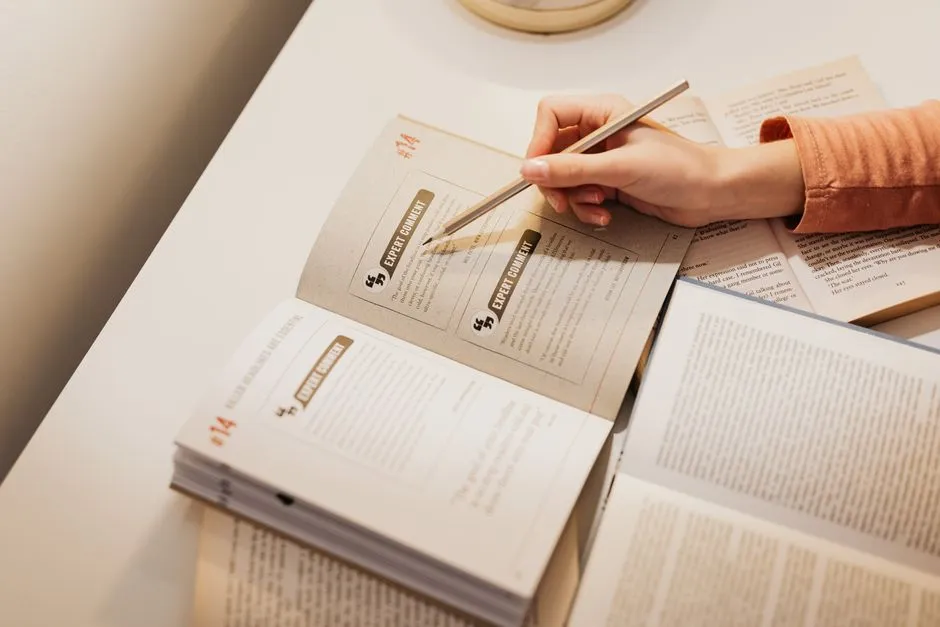
- How can you remember what you read?
- What exactly do you want to remember?
- Why close the book before summarizing?
- What should the checking step look like?
- How little can you write down?
- When should you revisit the question?
- Can talking about the book help?
- What if the notes become more work than the reading?
- Sources
How can you remember what you read?
To remember what you read, choose a few ideas worth keeping, recall them before reopening the book, and check your account against the text. Save a question and location for anything you want to revisit, then return after a gap. Use brief written or spoken summaries instead of copying everything. This is a reading practice, not a memory-health assessment; persistent or day-to-day memory problems deserve professional advice.
You can love a novel without retaining every cousin's name. The useful question is what you want to carry away: an argument, a scene, a distinction, or something to discuss. Remembering more is a different project from finishing more books.
What exactly do you want to remember?
Give the reading a modest purpose before creating notes. “Everything” makes even a short essay look like an administrative emergency.
| Your purpose | A useful recall question | What to locate for checking |
|---|---|---|
| Discuss a novel | What changed between these characters? | A scene supporting that interpretation |
| Understand nonfiction | What is the claim, and what supports it? | The explanation and its evidence |
| Enjoy the writing | What detail or effect stayed with me? | The passage, if exact wording matters |
| Learn for a course | What must I explain or apply? | Assigned material and instructor feedback |
UNC's reading-comprehension guidance asks students to connect reading purpose with the task that follows. Our table adapts that question to ordinary reading; it is not a requirement to turn a leisure book into an exam.
Choose one row today. You can keep another kind of note later if the book gives you a reason.
Why close the book before summarizing?
Recognizing a paragraph when you see it is different from producing its meaning without looking. UNC's memorization guidance warns that familiar material can feel remembered during rereading and recommends active self-questioning.
Retrieval practice means attempting to recall information from memory. UC San Diego's study guidance describes putting materials aside, recalling what you can, then reopening them to check accuracy and revisit gaps.
Try that after a manageable section. Say its main point or write a short account without peeking. Leave a blank when you cannot remember; do not make the account sound complete by guessing.
These sources concern academic learning. The lighter book-reading routine here is our editorial adaptation, not a tested promise that you will remember an entire novel months later.
What should the checking step look like?
Here is a tiny passage written for this guide, not a quotation from a published book:
Mina offered the reading group two meeting times. Six members preferred Tuesday and four preferred Thursday. She chose Thursday because the library room was unavailable on Tuesday. The notice gave the meeting time but did not explain the choice.
Close or cover that paragraph and answer: why did Mina choose Thursday?
A checked response might look like this:
| First recollection | What the passage establishes | Corrected note |
|---|---|---|
| Most members preferred Thursday | Six preferred Tuesday; four preferred Thursday | Preference and final choice differed |
| Thursday suited the room booking | Tuesday's room was unavailable | The stated reason was room availability |
| Members complained about the notice | No reaction is described | Response to the notice is unknown |
The invented count totals 10 members: 6 + 4. It does not prove anything about a real reading group.
The exercise separates recall, evidence, and inference. An appealing explanation still needs textual support. Correct your note visibly, then try answering the same question again without the passage. Do not rehearse the incorrect version because it sounded convincing.
How little can you write down?
Try one question, a brief answer in your own words, and a location. For the invented passage, that could be:
- Question: Why was Thursday chosen?
- Checked answer: Tuesday's room was unavailable, despite more members preferring Tuesday.
- Location: Mina example, opening paragraph.
For a real book, record the title and edition with page or chapter information; ebook locations and audio chapter references may differ. Mark a paraphrase as a paraphrase. Verify exact wording before putting it in quotation marks.
The University of Minnesota's SQ3R guidance includes reciting a synopsis without looking and reviewing connections afterward. You do not need to adopt the entire textbook system to try that part.
If you enjoy margin notes, our annotation guide handles the marking system. This article's extra step happens when the answer is out of sight. Keep borrowed, rented, or valuable copies unmarked without permission; a separate note works.
When should you revisit the question?
Return after some time has passed, not only while the paragraph is still in front of you. UNC's memorization guidance recommends distributing practice across days rather than concentrating every repetition together.
For leisure reading, choose a workable occasion: before the next session, after finishing the book, or before discussing it. These are planning suggestions, not a scientifically optimized schedule. There is no percentage of a book you are promised to retain after a particular interval.
Look at the question first. Attempt an answer, then check the saved location. If it is incomplete, revisit the relevant passage. If the concept itself remains unclear, reread for understanding rather than repeating an unexplained sentence.
Keep only the questions you still care about. You are building a usable route back to the book, not a permanent testing obligation.
Can talking about the book help?
Try explaining one idea to a willing listener or making a private voice note. UNC's study guidance recommends explaining material in your own words and using examples to identify uncertainty.
For a book conversation, separate three statements: what the author says, what you remember, and what you think about it. “I read the ending as forgiveness” is an interpretation; “the narrator explicitly forgives him” is a textual claim to verify.
If another reader disagrees, return to the passage together. A discussion can reveal a missed detail, but agreement between friends is not proof. Avoid sharing spoilers with someone who wants to read the book, and do not redistribute substantial excerpts under the label of study notes.
What if the notes become more work than the reading?
Reduce the system before abandoning the book. Keep a single end-of-session question, or speak an answer and save only the location that needs checking. A long transcript is unnecessary when your goal is remembering one important distinction.
Our reading-skills hub separates close-reading methods from the book-discovery questions about what suits you now. A book chosen for pleasure does not owe you a set of revision cards.
Not remembering every detail does not erase the experience. But do not use a reading worksheet to explain away ongoing memory concerns. The NHS advises seeing a GP if memory problems keep occurring or affect daily life, and advises against self-diagnosing the cause.
For the next chapter, the whole experiment can be small: choose a question, answer it with the book closed, check it, and leave a clear way back.
Sources
University guidance and the scoped health source opened and read September 7, 2026: